Launch offer — valid today only

The Able Seafarer Exam, Q450 and Q451, One Drawn Topic per Page With Every Light, Shape and Buoy Drawn Step by Step!

Lights, day shapes, sound signals, crossing rules, buoys, compass error, knots, lifeboats and firefighting: in your notes it's a wall of text. Here every topic fits on one page, with the drawing and what you need to remember. Built on U.S. sources, with Inland and International Rules marked where they differ. 65 illustrated pages.

I WANT TO STUDY IT WITH DRAWINGS

🔒 Secure checkout · PDF by email · 30-day guarantee

One topic per pagethe drawing shows you the rule and the text backs it up
65 illustrated pages11 parts, from the AB exam to exam day
Up-to-date sourcesUSCG NMC, Navigation Rules (33 CFR 83) and U.S. Aids to Navigation (33 CFR 62)

This Is What the Pages You Will Study Look Like

One topic per page, the drawing that shows you how it looks and the boxes with what you need to know:

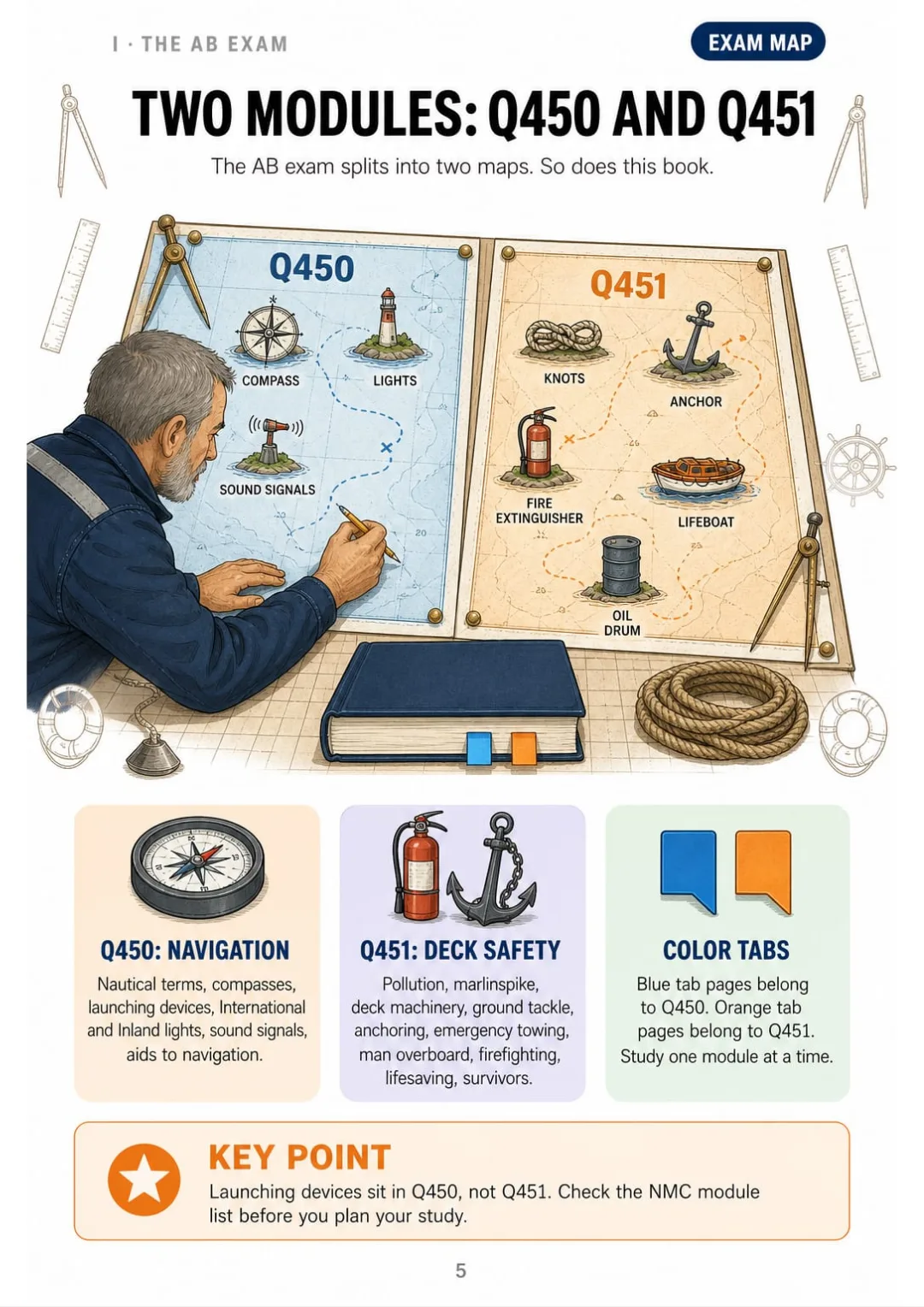
Q450 Navigation and Rules of the Road vs Q451 Deck General Safety, side by side
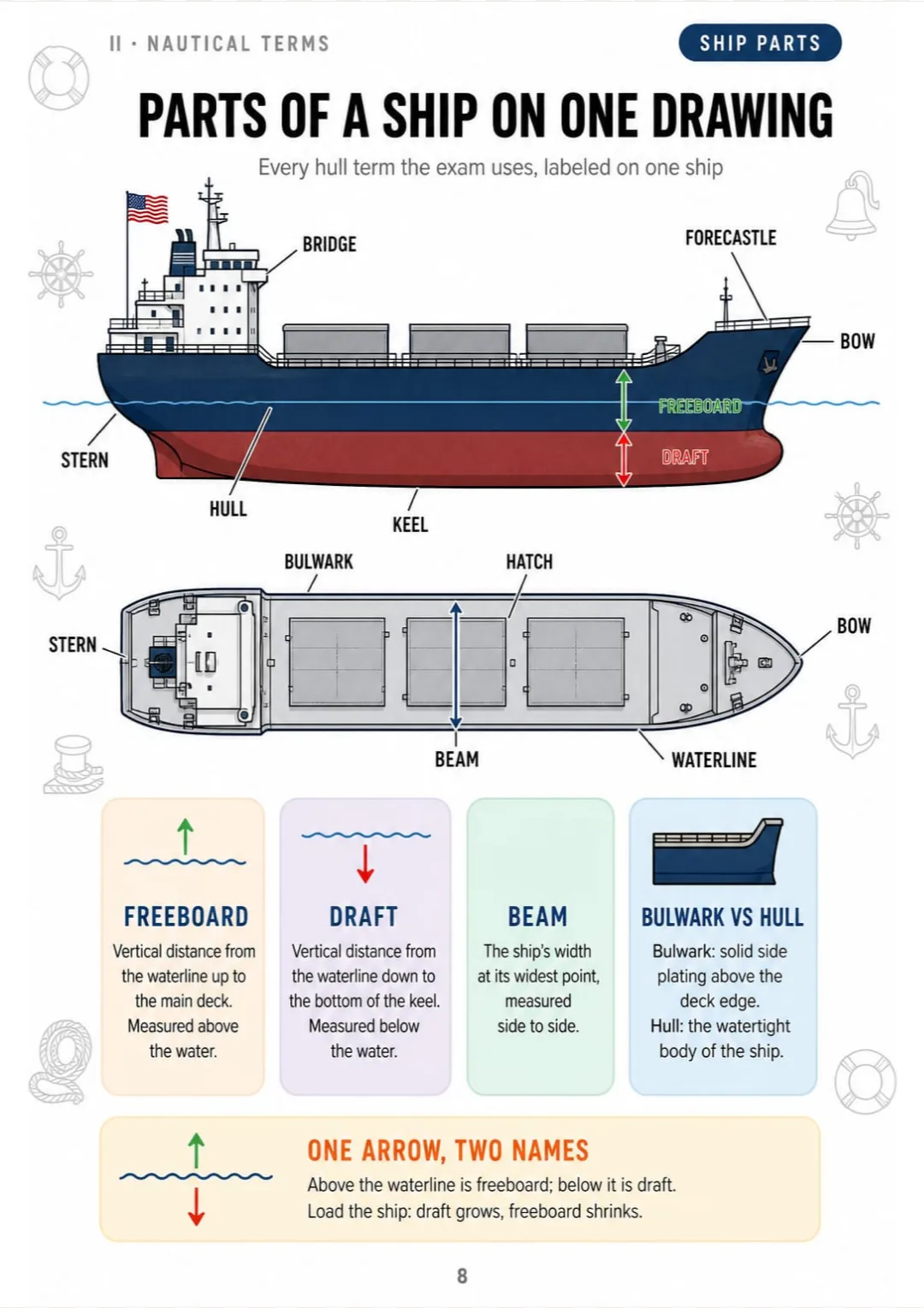
Freeboard goes up from the waterline, draft goes down to the keel: one arrow, never confused.
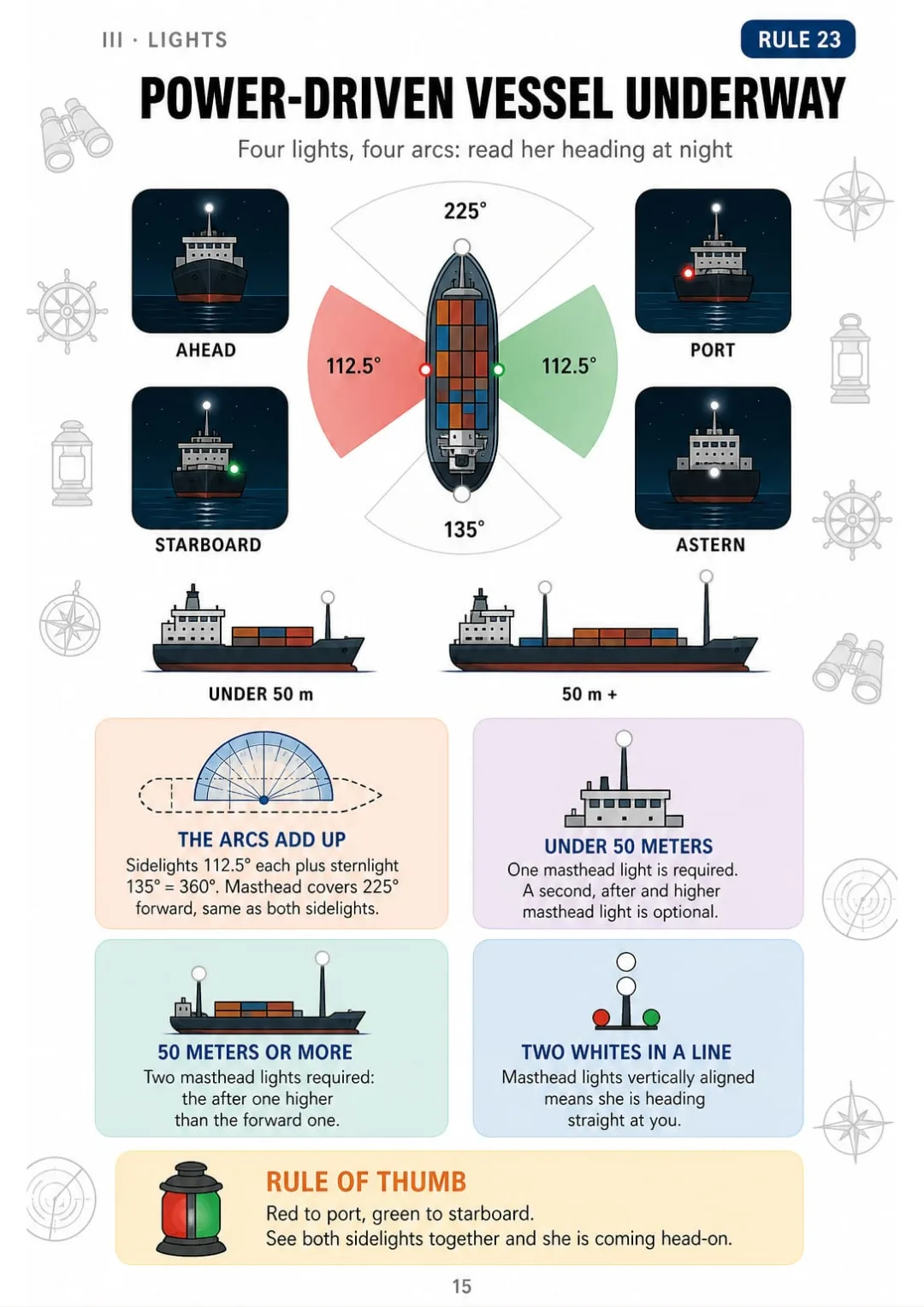
Masthead 225°, sidelights 112.5° each, sternlight 135°: drawn from four angles
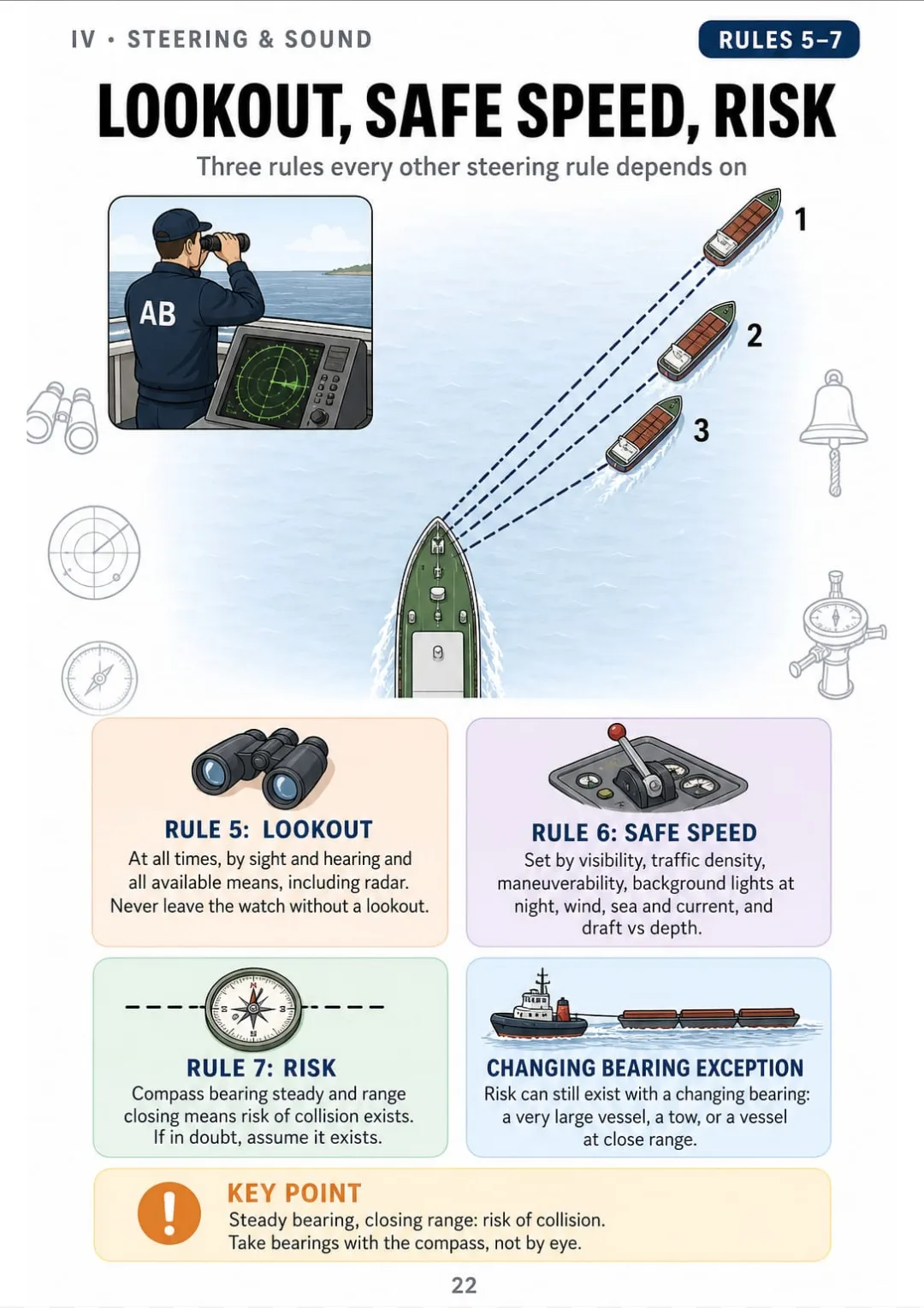
Rules 5, 6 and 7: lookout, six safe-speed factors and the steady bearing drawn as a plot.
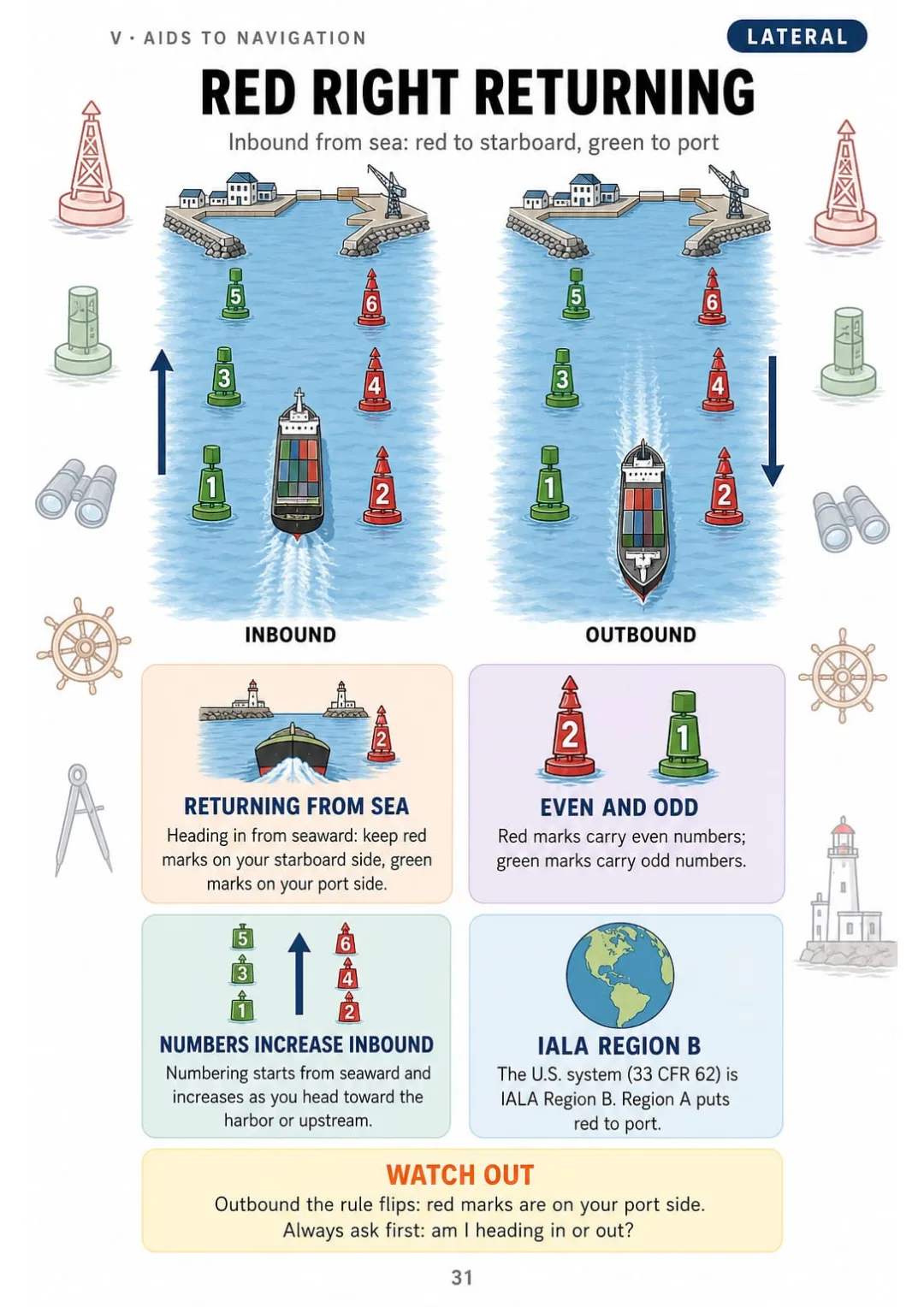
Inbound: red even numbers to starboard, green odd numbers to port (33 CFR 62, IALA B).
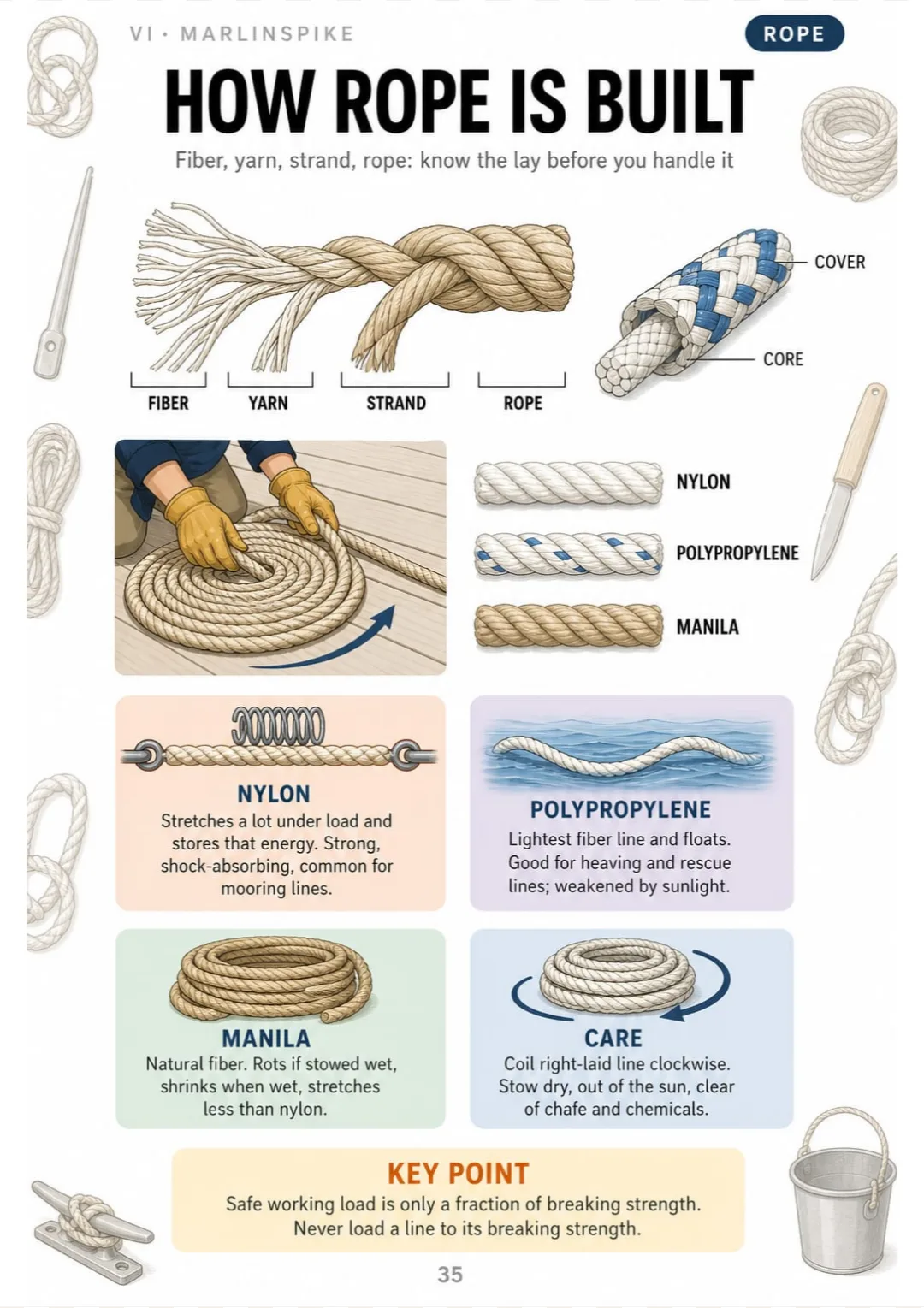
Three-strand vs double braid, nylon vs polypropylene vs manila, coiled clockwise.
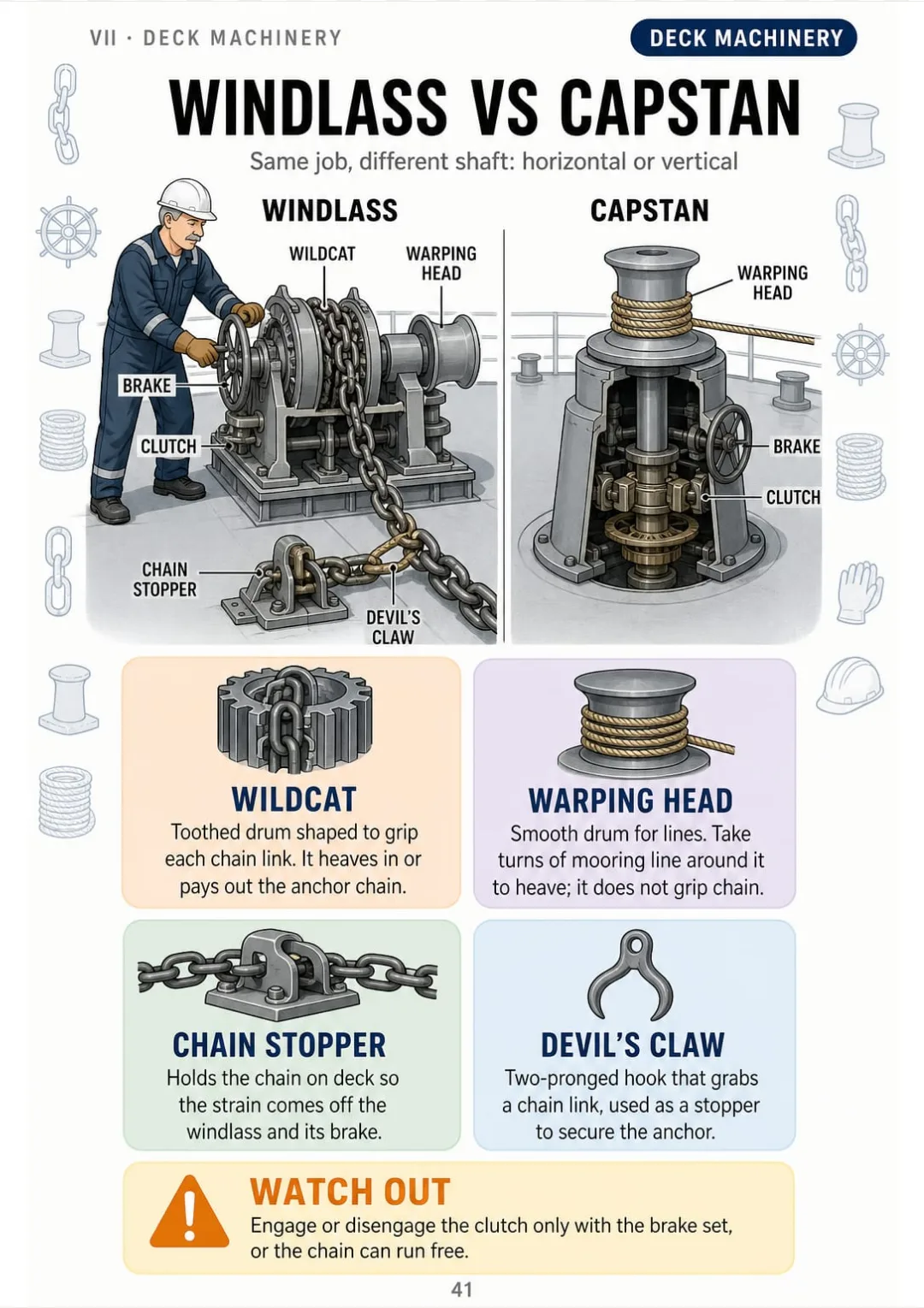
Windlass vs capstan: wildcat for chain, warping head for lines, brake before clutch
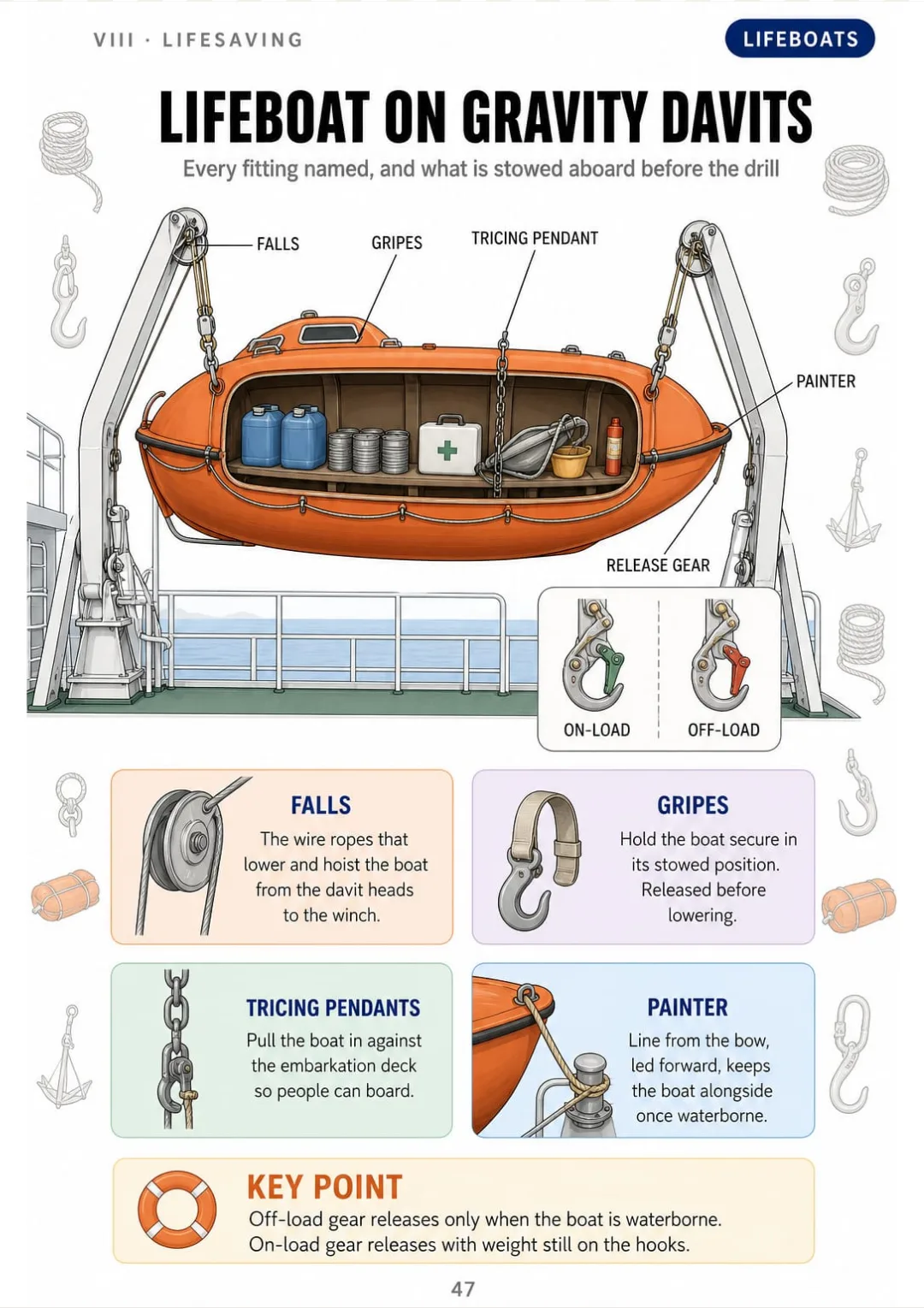
Lifeboat on gravity davits: falls, gripes, tricing pendants, painter and on-load vs off-load hooks.

Swipe to see more →

These are real pages from the book. The table of contents is the full one: 11 parts and 61 topics.

It's That No One Put the Rules in Order.

You've read the lights of a power-driven vessel underway three times. You close the book...

...and you can't remember which light covers 225° and which covers 135°. It was just lines of text.

Masthead 225°, sidelights 112.5° each, sternlight 135°: drawn from four angles

Here the power-driven vessel is one page, drawn from four angles: the masthead light, the two sidelights and the sternlight, each with its arc.

And on the pages next to it, every vessel has its own: the tug towing, the sailing vessel, the fishing vessel, the vessel at anchor and the vessel aground.

First you understand why each light sits where it does. Then the lights come back to you on their own.

SEE THE DIFFERENCE

Stop memorizing rules you can't picture:

THIS
  • Pages and pages of dense text
  • Lights and buoys without a single drawing
  • On the exam, you don't know where to start
The hull of a vessel is divided longitudinally into the bow, or forward section, the midships section and the stern, or after section. The vertical distance measured at the side from the waterline to the upper edge of the freeboard deck is designated the freeboard, whereas the vertical distance measured from the waterline to the bottom of the keel is designated the draft. The two measurements are taken in opposite directions from the same reference line and shall not be confused when reading draft marks or load line markings.
FOR THIS
  • Every light, shape and buoy drawn
  • One topic per page, with the rules in boxes
  • You remember it because you've seen it
Freeboard goes up from the waterline, draft goes down to the keel: one arrow, never confused.
CONTENTS

Take a Look at the 11 Parts and 61 Topics

The AB exam, nautical terms and the compass, lights, steering and sound signals, aids to navigation, marlinspike seamanship, deck machinery and anchoring, lifesaving, firefighting, pollution and the final review: 65 pages, all drawn

IThe AB Exam · pp. 5-7
  1. Two Modules: Navigation and Deck Safety
  2. How the NMC Exam Works
  3. How to Study the Rules of the Road
IINautical Terms and the Compass · pp. 8-14
  1. Parts of a Ship on One Drawing
  2. Directions and Bearings Aboard
  3. Nautical Terms That Sound Alike
  4. The Magnetic Compass
  5. The Gyrocompass
  6. Variation, Deviation and Compass Error
  7. Steering Orders and the Helm
IIIRules of the Road: Lights · pp. 15-21
  1. Power-Driven Vessel Underway
  2. Vessels Towing and Pushing
  3. Sailing Vessels and Vessels Under Oars
  4. Fishing Vessels
  5. Not Under Command and Restricted in Ability to Maneuver
  6. Constrained by Draft, Pilot Vessels and Vessels at Anchor
  7. Vessels Aground
IVRules of the Road: Steering, Sailing and Sound · pp. 22-30
  1. Lookout, Safe Speed and Risk of Collision
  2. Head-On, Crossing and Overtaking
  3. Give-Way vs Stand-On
  4. Narrow Channels and Traffic Separation
  5. Restricted Visibility
  6. Maneuvering and Warning Signals
  7. Sound Signals in Restricted Visibility
  8. International vs Inland: Key Differences
  9. Day Shapes
VAids to Navigation · pp. 31-34
  1. Lateral Marks: Red Right Returning
  2. Buoy Shapes, Colors and Numbers
  3. Light Characteristics
  4. Daybeacons and Ranges
VIMarlinspike Seamanship · pp. 35-40
  1. Rope Construction and Care
  2. Essential Knots: Bowline, Clove Hitch, Sheet Bend
  3. Splices: Eye and Short
  4. Whipping and Seizing
  5. Mooring Lines and Their Names
  6. Line Handling Safety: the Snap-Back Zone
VIIDeck Machinery, Anchoring and Towing · pp. 41-46
  1. Windlass and Capstan
  2. Ground Tackle: Anchor and Chain
  3. Shots of Chain and Scope
  4. Anchoring Step by Step
  5. Cargo Gear and Blocks
  6. Emergency Towing
VIIILifesaving and Survival · pp. 47-53
  1. Lifeboats and Davits
  2. Launching Devices
  3. Liferafts and Hydrostatic Releases
  4. Lifejackets and Immersion Suits
  5. Man Overboard: the Williamson Turn
  6. Distress Signals and Pyrotechnics
  7. Care of Survivors
IXFire Prevention and Firefighting · pp. 54-59
  1. The Fire Tetrahedron
  2. Classes of Fire
  3. Portable Extinguishers
  4. Fixed Systems: CO2 and Foam
  5. Fire Hoses and Nozzles
  6. Fire Prevention Aboard
XPollution Prevention · pp. 60-63
  1. Pollution Laws in One Page
  2. Oil Discharge Rules
  3. Garbage: What Can Go Overboard
  4. Containment and Cleanup of Spills
XIFinal Review and Exam Day · pp. 64-65
  1. Frequent Mix-Ups, Side by Side
  2. Exam Day Checklist

What If Every Topic Fit on a Single Page?

Picture this:

Instead of rereading half a page on the lights of a vessel towing without being able to see them...

...you open the page and find the tug drawn from the side and from above, with its extra masthead lights, the yellow towing light and the length of tow that changes them.

Inbound: red even numbers to starboard, green odd numbers to port (33 CFR 62, IALA B).

And crossing rules, sound signals, buoys, compass error and the Williamson turn become drawings and tables you can read at a glance.

You stop repeating and start understanding.

That's exactly what The Able Seafarer Exam Sketchbook does. It's not just another manual: it's 11 parts and 65 drawn pages, and at the end the most frequent mix-ups side by side and an exam-day checklist. What you see in order is easier to remember.

Because what your brain sees organized, it remembers.

Here Is What You Get with The Able Seafarer Exam Sketchbook:

Ipp. 5-7

The AB Exam

What each module covers (Q450 Navigation and Rules of the Road, Q451 Deck General Safety), how the NMC exam works and how to study the Rules.

IIpp. 8-14

Nautical Terms and the Compass

The parts of a ship on one drawing, directions and bearings, look-alike terms, the magnetic compass and the gyro, compass error in the same steps every time (true, variation, magnetic, deviation, compass), and helm orders.

IIIpp. 15-21

Rules of the Road: Lights

Lights stop being a list: every vessel is drawn with its lights and arcs, so you recognize at a glance a power-driven vessel, a tug towing or pushing, a sailing or fishing vessel, NUC and RAM, constrained by draft, a pilot vessel, at anchor or aground.

IVpp. 22-30

Rules of the Road: Steering, Sailing and Sound

You know who gives way and why: lookout and safe speed, head-on, crossing and overtaking, give-way and stand-on, narrow channels, restricted visibility, sound signals, day shapes, and where International and Inland differ.

Vpp. 31-34

Aids to Navigation

Red right returning, buoy shapes, colors and numbers, light characteristics, daybeacons and ranges.

VIpp. 35-40

Marlinspike Seamanship

Rope construction and care, the bowline, clove hitch and sheet bend, splices, whipping and seizing, mooring lines and the snap-back zone.

VIIpp. 41-46

Deck Machinery, Anchoring and Towing

Windlass and capstan, anchor and chain, shots and scope, anchoring step by step, cargo gear and blocks, and emergency towing.

VIIIpp. 47-53

Lifesaving and Survival

Lifeboats and davits, launching devices, liferafts and hydrostatic releases, lifejackets and immersion suits, the Williamson turn, distress signals and care of survivors.

IXpp. 54-59

Fire Prevention and Firefighting

The fire tetrahedron, classes of fire, portable extinguishers, CO2 and foam systems, hoses and nozzles, and fire prevention aboard.

Xpp. 60-63

Pollution Prevention

Pollution laws on one page, oil discharge rules, what garbage can go overboard, and spill containment and cleanup.

XIpp. 64-65

Final Review and Exam Day

The most frequent mix-ups side by side and an exam-day checklist.

At the end of the book: The most frequent mix-ups side by side and an exam-day checklist.
And That Is Not All: 2 More Books, Free

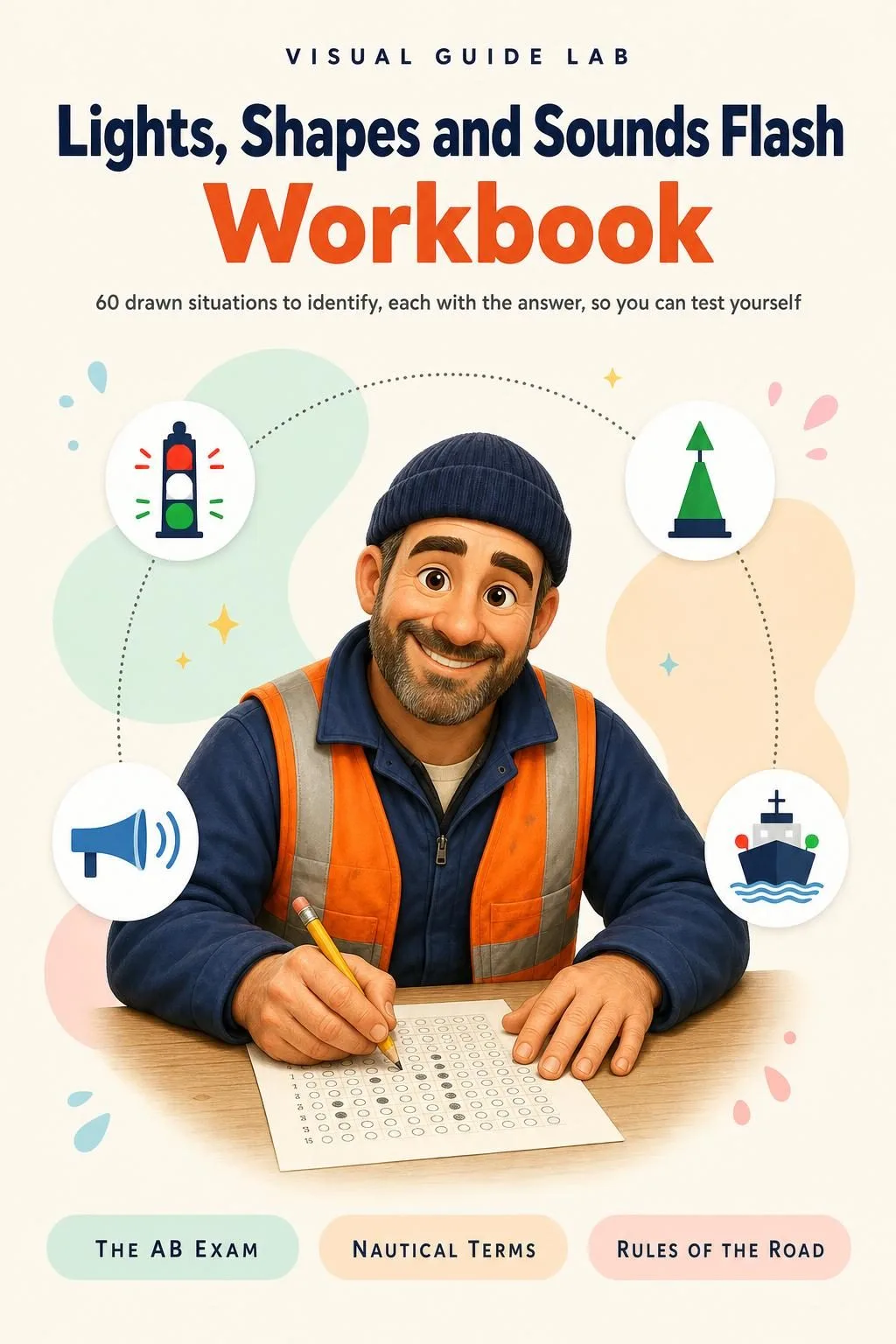
Lights, Shapes and Sounds Flash Workbook

BONUS 1: «Lights, Shapes and Sounds Flash Workbook»

Value on its own: US$ 17.90

60 drawn situations to identify, each with the answer, so you can test yourself on lights, day shapes and sound signals until you call them without hesitating.

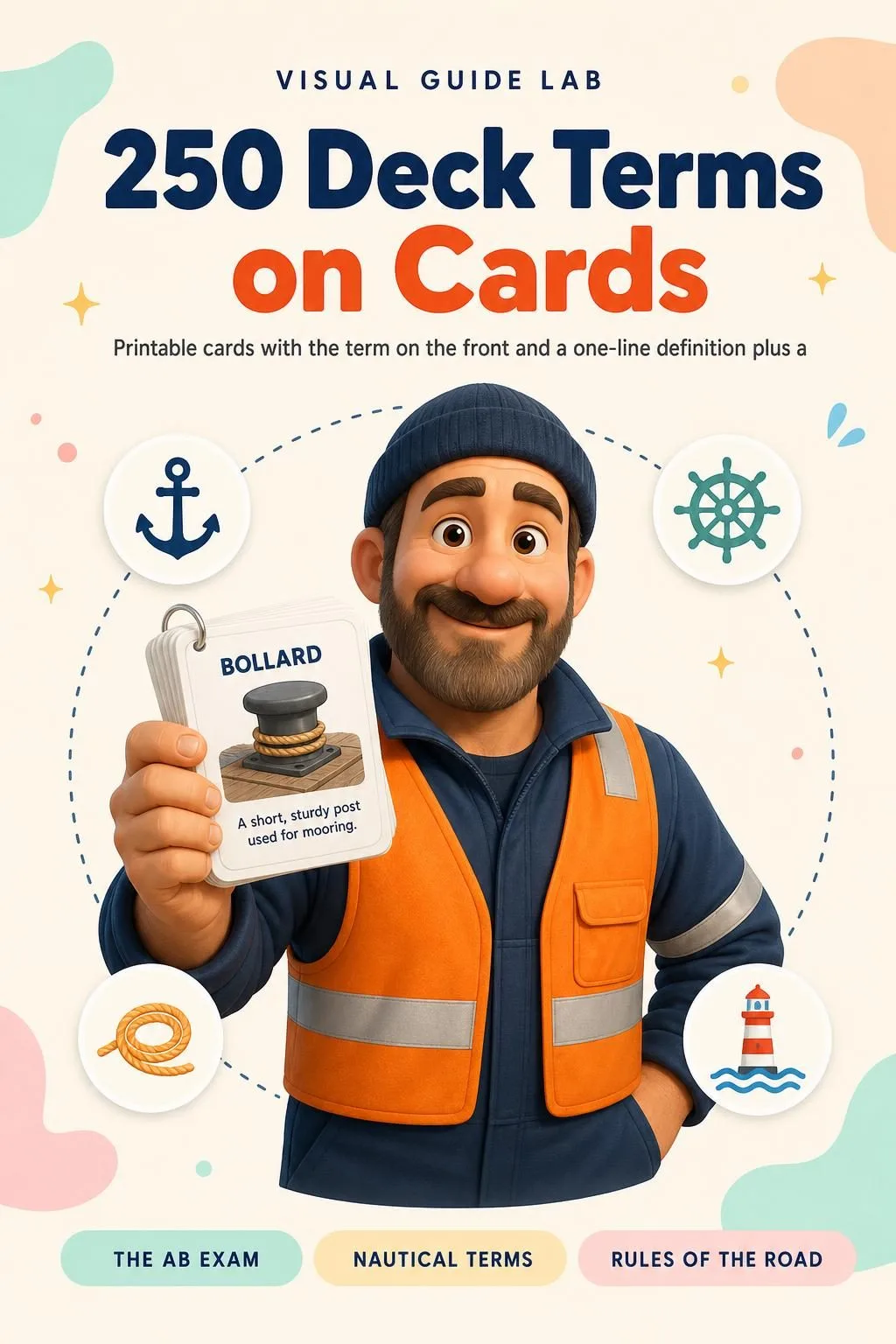
250 Deck Terms on Cards

BONUS 2: «250 Deck Terms on Cards»

Value on its own: US$ 14.90

Printable cards with the term on the front and a one-line definition plus a tiny sketch on the back, so you can review deck vocabulary in short breaks on board.

The Able Seafarer Exam Sketchbook + 2 Free Books

  • The Able Seafarer Exam Sketchbook: 65 illustrated pagesUS$ 63
  • BONUS 1: Lights, Shapes and Sounds Flash WorkbookUS$ 17.90
  • BONUS 2: 250 Deck Terms on CardsUS$ 14.90
  • High-resolution PDF to printIncluded
Total value US$ 95.80
YOUR PRICE:
US$ 27
You save US$ 68.80
YES, I WANT THE ABLE SEAFARER EXAM SKETCHBOOK FOR US$ 27

📄 This is a digital PDF book sent to your email: nothing is printed or shipped.

Secure purchaseEncrypted payment30-day guarantee

PDF by email: The Able Seafarer Exam Sketchbook reaches your inbox as a PDF, and the two free books come by email too. One-time payment, no installments or hidden costs.

Is This Book for You?

You're building sea time as an OS

You're building sea time as an OS

Lights, buoys, knots and deck gear, one topic per page, to review between watches or on your days ashore.

Your Q450 and Q451 are coming up

Your Q450 and Q451 are coming up

A full review of both modules in the same order every time, and at the end the most frequent mix-ups side by side and an exam-day checklist.
You've worked on deck for years and now you're going for your AB

You've worked on deck for years and now you're going for your AB

A quick, visual refresher on what you haven't studied in a while: U.S. buoyage (IALA B), International vs Inland Rules and compass error.

To Sum Up: Here Is What You Get

US$ 95.80US$ 27
YES, I WANT THE ABLE SEAFARER EXAM SKETCHBOOK FOR US$ 27

📄 This is a digital PDF book sent to your email: nothing is printed or shipped.

30DAYS
GUARANTEE

30-Day Guarantee

30-day guarantee: tell us what didn't work and we'll refund 100%.

You have 30 days to try The Able Seafarer Exam Sketchbook and the two bonus books. If it doesn't work for you, tell us what didn't work (a file that won't open, content that isn't what this page describes, or anything else) and we'll refund 100% of what you paid. One-time payment, no subscriptions.

Frequently Asked Questions

How do I get the material?

The Able Seafarer Exam Sketchbook comes as a high-resolution PDF by email, to the address you enter at checkout, to read on your phone or print. The two bonus books, Lights, Shapes and Sounds Flash Workbook and 250 Deck Terms on Cards, come by email too.

Is it a monthly payment or a one-time payment?

One-time payment of $27. No installments, no subscription. The book and the two bonus books are everything you need to study the topics; the extras offered at checkout are optional.

Who is it for?

For deck ratings preparing the Able Seafarer (AB01) exam modules Q450 and Q451, and for mariners retaking a module or going for the AB endorsement after years on deck. It starts from the basics (parts of a ship, directions, helm orders) and goes all the way to the Rules and lifesaving, so it works whether you're new to the books or coming back to them. If you're only renewing your MMC, check with the NMC whether you need an exam at all. See the table of contents above for every topic.

What sources is it based on?

On the NMC information for the Able Seafarer modules and 46 CFR 12.405; the Navigation Rules International–Inland (33 CFR 83, COMDTINST M16672.2) and the demarcation lines in 33 CFR 80; the U.S. Aids to Navigation System (33 CFR 62); and the pollution rules in 33 CFR 151 and 155 and MARPOL. Where International and Inland Rules differ, the page says which one applies.

Is this official material?

No. It's independent study material. It isn't published by, affiliated with or endorsed by the U.S. Coast Guard or the National Maritime Center.

Does it replace approved courses, sea service or practical assessments?

No. It helps you study the exam content only. It doesn't give you a certificate, doesn't count as an approved course and doesn't replace sea service or practical assessments. For those requirements, check the NMC and 46 CFR 12.405.

Are the practice situations the real exam questions?

No. The drawn situations in the workbook, and the practice tests offered as extras at checkout, are written for this book. They aren't official questions from any exam: they're there to train you on the same topics.

Can I print it?

Yes. Print the whole book or just the pages you need and take them aboard.

What if I don't like it?

You have a 30-day guarantee: tell us what didn't work and we'll refund 100%.

One Last Thing Before You Decide...

You don't have to reread the same page hoping it sticks this time.

You don't have to memorize lights and buoys you can't picture.

And you definitely don't have to walk into the exam not knowing where to start.

65 drawn pages for Q450 and Q451, plus 2 bonus books. PDF by email, printable, a one-time payment of $27 and a 30-day guarantee.

One-time payment: US$ 27 · Guarantee: 30 days · PDF by email

YES, I WANT THE ABLE SEAFARER EXAM SKETCHBOOK FOR US$ 27

📄 This is a digital PDF book sent to your email: nothing is printed or shipped.